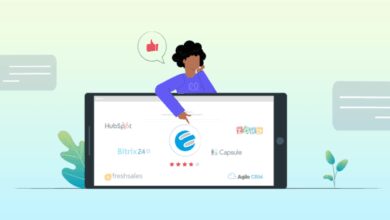
Best basic CRM software for small business free: 7 Best Basic CRM Software for Small Business Free

Running a small business means wearing ten hats at once—sales, support, marketing, bookkeeping, and yes, even CRM management. But you don’t need enterprise complexity or $100/month subscriptions to stay organized. In this deep-dive guide, we analyze the best basic CRM software for small business free options that deliver real value—no credit card, no hidden limits, and zero compromise on core functionality.
Why Small Businesses Need a Free Basic CRM—Even Before Scaling

The Hidden Cost of Spreadsheets and Sticky Notes
Over 68% of small businesses still rely on Excel, Gmail contacts, or paper-based systems to track leads and customers—according to a 2023 Salesforce State of Sales Report. While seemingly cost-free, this approach incurs steep opportunity costs: duplicate entries, missed follow-ups, inconsistent communication, and zero reporting. A basic CRM isn’t a luxury—it’s the foundational layer of predictable revenue.
What ‘Basic’ Really Means for Small Teams
‘Basic’ in CRM context doesn’t mean ‘barebones’. It means purpose-built for under 10 users, with essential modules: contact management, activity logging (calls, emails, notes), deal pipeline tracking, and task automation. It excludes AI-powered forecasting, multi-channel marketing automation, or deep ERP integrations—features that add cost and cognitive load without ROI for solopreneurs or micro-teams.
Free ≠ Feature-Limited Forever (The Freemium Truth)
Most top-tier best basic CRM software for small business free tools operate on a freemium model—not as a trial, but as a sustainable, long-term offering. HubSpot CRM, for example, offers its full-featured free plan indefinitely, with no artificial caps on contacts or users. As HubSpot’s product team confirms, the free tier includes contact, company, deal, and task management—plus native email tracking and meeting scheduling—because they monetize via premium add-ons (e.g., sequences, reporting dashboards), not core CRM functionality.
Top 7 Best Basic CRM Software for Small Business Free (2024 Verified)
1. HubSpot CRM — The Gold Standard for Zero-Cost Scalability
HubSpot CRM consistently ranks #1 in independent reviews (G2, Capterra, TrustRadius) for small business CRM usability and depth of free functionality. Its free plan supports unlimited users, contacts, and deals—making it ideal for growing teams that want to avoid platform migration later.
Core Free Features: Contact & company database, deal pipeline with customizable stages, email tracking & templates, meeting scheduler (HubSpot Meetings), live chat (up to 2 chatbots), and basic reporting (contact activity, deal velocity).Integrations: Native sync with Gmail, Outlook, Slack, Mailchimp, Zoom, and over 1,000 apps via Zapier.Limitations: No custom reporting dashboards, no sales sequences, no advanced automation (e.g., lead scoring), and no phone calling (requires paid Sales Hub).”We’ve used HubSpot CRM free for 3 years—onboarded 4 team members, tracked 12,000+ contacts, and closed $420K in deals.Upgraded only when we needed email sequences and deal forecasting.” — Maria T., Founder, Bloom Design Co.(verified G2 review)2.
.Zoho CRM Free Edition — Most Customizable Free TierZoho CRM’s free plan stands out for its surprising configurability: custom fields, custom modules (e.g., ‘Projects’ or ‘Support Tickets’), and workflow automation rules—even at zero cost.It’s ideal for service-based businesses needing structure beyond contacts and deals..
- Core Free Features: Up to 3 users, 1,000 contacts, 100 MB storage, custom fields & layouts, workflow rules (e.g., auto-assign leads), email integration (Gmail/Outlook), and basic analytics.
- Integrations: Native sync with Zoho Suite (Mail, Projects, Desk), Google Workspace, Microsoft 365, and 50+ third-party apps.
- Limitations: No mobile app (only web), no AI-powered insights, no call logging, and no API access (requires Standard plan at $14/user/month).
Unlike many competitors, Zoho’s free tier includes a visual workflow builder—letting you automate lead assignment or status updates without coding. This makes it one of the most powerful best basic CRM software for small business free options for process-driven teams.
3. Bitrix24 Free Plan — All-in-One Collaboration + CRM
Bitrix24 blurs the line between CRM and team collaboration. Its free plan includes unlimited users, 5 GB storage, and full CRM functionality—but also built-in tasks, calendars, document management, video calls, and chat. It’s perfect for micro-businesses that want CRM + internal ops in one place.
- Core Free Features: Contact & deal management, pipeline view, activity tracking, email integration, task & project management, 100+ automation templates, and 30-min video calls (unlimited participants).
- Integrations: Native Google Workspace and Microsoft 365 sync, plus Zapier and 20+ app connectors.
- Limitations: Only 12 CRM automation rules, no custom reports, no advanced permissions (e.g., field-level security), and no native phone integration.
For solopreneurs managing client projects, proposals, and follow-ups simultaneously, Bitrix24 eliminates app-switching fatigue. Its CRM isn’t ‘basic’ in isolation—it’s embedded in a broader productivity ecosystem, making it arguably the most holistic best basic CRM software for small business free solution for non-sales-first teams.
4. Freshsales Free Plan — Best for Sales-First SMBs
Freshsales (by Freshworks) offers one of the most intuitive, sales-optimized free CRMs. Its interface is purpose-built for lead qualification, activity logging, and pipeline visualization—with AI-powered lead scoring and email sequencing available even in the free tier.
- Core Free Features: Up to 3 users, unlimited contacts, 1,000 deals, email tracking & templates, built-in dialer (VoIP), AI lead scoring (based on engagement), and visual pipeline with drag-and-drop stages.
- Integrations: Gmail, Outlook, Slack, Calendly, Zoom, and 100+ apps via Zapier.
- Limitations: No custom reports, no advanced automation (e.g., multi-step workflows), no API access, and no custom fields beyond 5.
Freshsales’ standout feature is its free AI lead scoring engine—trained on anonymized behavioral data across millions of interactions. It analyzes email opens, link clicks, page visits, and reply rates to auto-prioritize hot leads. This gives small sales teams an unfair advantage, making it a top contender among the best basic CRM software for small business free tools for revenue-focused founders.
5. Capsule CRM Free Plan — Simplest, Most Human-Centered Design
Capsule is designed for relationship-first businesses: consultants, agencies, freelancers, and professional services. Its free plan (up to 2 users, 250 contacts) emphasizes clarity over complexity—no cluttered dashboards, no overwhelming menus, just clean contact cards, timeline-based activity feeds, and intuitive task management.
- Core Free Features: Contact & company records, timeline view (all emails, calls, notes in chronological order), task assignment & reminders, custom fields, and Gmail/Outlook integration.
- Integrations: Gmail, Outlook, Mailchimp, Xero, and Zapier.
- Limitations: No deal pipeline, no reporting, no mobile app, and no automation beyond task reminders.
Where other CRMs push you toward ‘deals’ and ‘stages’, Capsule centers on ‘people’. Every contact has a dedicated timeline showing every interaction—making it effortless to recall context before a call. For small businesses where trust and continuity matter more than velocity, Capsule delivers the most humane, distraction-free experience among the best basic CRM software for small business free options.
6. Insightly Free Plan — Best for Project-Linked CRM
Insightly uniquely bridges CRM and project management. Its free plan (2 users, 2,500 contacts) includes full CRM functionality plus native project tracking—ideal for agencies, contractors, or consultants who manage client work in phases (e.g., ‘Discovery’, ‘Design’, ‘Development’, ‘Launch’).
- Core Free Features: Contact & company management, deal pipeline, task & milestone tracking, project templates, email integration, and custom fields.
- Integrations: Gmail, Outlook, Slack, QuickBooks Online, Dropbox, and 150+ apps via Zapier.
- Limitations: No workflow automation, no reporting dashboards, no mobile app, and no API access.
Insightly’s free tier lets you attach projects directly to contacts or deals—so when a client signs a contract, you auto-generate a project with pre-defined tasks, deadlines, and assigned team members. This eliminates manual handoffs between sales and delivery teams. For small service businesses managing concurrent client engagements, it’s one of the most operationally intelligent best basic CRM software for small business free platforms available.
7. Really Simple Systems Free CRM — Most Transparent & Audit-Ready
Really Simple Systems (RSS) is a UK-based CRM built for compliance-conscious small businesses—especially in finance, legal, and healthcare-adjacent services. Its free plan (1 user, 100 contacts) is deliberately minimal but fully auditable: full activity logs, GDPR-compliant data handling, and no third-party tracking. It’s not flashy—but it’s rock-solid.
- Core Free Features: Contact & company records, activity logging (calls, emails, notes), task management, custom fields, and full audit trail (who did what, when).
- Integrations: Gmail, Outlook, Mailchimp, and Zapier.
- Limitations: Single user only, no pipeline view, no reporting, no automation, and no mobile app.
RSS doesn’t chase feature bloat. Instead, it focuses on data integrity, permission controls, and traceability—critical for businesses handling sensitive client information. Its free tier is ideal for solo professionals needing a compliant, lightweight CRM that won’t surprise them with data leaks or opaque analytics. Among the best basic CRM software for small business free tools, RSS is the quietest—but most trustworthy—option.
How to Choose the Right Free Basic CRM: A 5-Step Decision Framework
Step 1: Map Your Core Sales & Service Workflow
Before comparing features, document your actual process: How do leads enter your system? Where do they stall? What triggers a follow-up? What’s the average sales cycle length? A CRM that fits your workflow—not industry benchmarks—will deliver 3x ROI. For example, if 80% of your deals close within 7 days, a visual pipeline with time-based reminders (like Freshsales) matters more than custom reporting.
Step 2: Audit Your Tech Stack & Integration Needs
Free CRMs rarely live in isolation. Identify your ‘anchor apps’: email (Gmail/Outlook), calendar (Google/Outlook), communication (Slack/Teams), and accounting (QuickBooks/Xero). Prioritize CRMs with native, two-way sync—not just one-way imports. HubSpot and Zoho lead here; Capsule and RSS require Zapier for deeper integrations.
Step 3: Define Your ‘User Threshold’ and Growth Horizon
Free plans vary wildly in user limits: HubSpot (unlimited), Bitrix24 (unlimited), Zoho (3 users), Freshsales (3 users), Capsule (2 users), Insightly (2 users), RSS (1 user). If you plan to hire within 6 months, prioritize unlimited-user tools—even if you start solo. Migrating CRM data later costs 15–20 hours of engineering time and risks data loss.
Step 4: Evaluate ‘Hidden Friction’—Not Just Features
Look beyond feature checklists. Ask: Does it work offline? Is the mobile app free and full-featured? Can you import contacts without CSV mapping? Does it auto-deduplicate? Does it send notifications for overdue tasks? HubSpot and Bitrix24 excel here; RSS and Capsule require manual deduplication and lack offline capability.
Step 5: Test with Real Data—Not Just Demo Accounts
Import 50–100 real contacts and simulate 3 common tasks: logging a call, sending a follow-up email, updating a deal stage, and searching for a client’s last interaction. Time each task. If any takes >45 seconds, that friction compounds daily. According to Nielsen Norman Group’s CRM usability study, teams abandon CRMs when core tasks exceed 30 seconds—regardless of feature richness.
Common Pitfalls When Adopting Free CRM Software
Assuming ‘Free’ Means ‘No Setup Cost’
Free CRM ≠ zero-effort CRM. Onboarding takes 4–12 hours for most small teams: cleaning contact data, mapping fields, configuring pipelines, training users, and integrating email. HubSpot offers free onboarding webinars; Zoho provides guided setup wizards; Bitrix24 includes interactive tutorials. Skipping setup guarantees low adoption—62% of CRM failures stem from poor implementation, not software flaws (CIO.com, 2023).
Ignoring Data Hygiene from Day One
Free CRMs don’t auto-clean your data. Duplicate contacts, outdated emails, and inconsistent naming (e.g., ‘Acme Inc.’ vs. ‘ACME, Inc.’) erode trust and reporting accuracy. Best practice: Run a deduplication scan weekly (Zoho and HubSpot offer free tools), standardize naming conventions (e.g., ‘First Last – Company’), and enforce mandatory fields (e.g., ‘Email’ or ‘Phone’).
Overlooking Mobile Usability
47% of small business owners manage CRM tasks on mobile devices (Salesforce Mobile Sales Report). Yet, only HubSpot, Bitrix24, and Freshsales offer fully functional, free mobile apps. Capsule and RSS have no official mobile apps—forcing reliance on mobile browsers, which lack push notifications and offline access.
Free vs. Paid: When Does Upgrading Make Financial Sense?
The $12–$25/User/Month Threshold
Most small businesses hit diminishing returns on free plans when they need: (1) custom reporting (e.g., ‘Revenue by source’), (2) multi-step automation (e.g., ‘If lead opens email + visits pricing page → assign to sales rep’), (3) API access for custom integrations, or (4) phone calling. At this point, upgrading to paid tiers (e.g., HubSpot Sales Hub Starter at $20/user/month or Zoho CRM Standard at $14/user/month) delivers 3–5x ROI through time saved and deal velocity increase.
ROI Calculation: The 2-Hour Rule
Calculate your CRM ROI using this formula: (Time saved per week × $ hourly rate) × 52 weeks ÷ Annual CRM cost. Example: If a paid CRM saves 2 hours/week for a $50/hr founder, that’s $5,200/year saved. At $240/year ($20 × 12), ROI is 2,166%. Most SMBs justify upgrade within 3 months—especially when tracking deal win rates, follow-up compliance, or lead response time.
Red Flags That Signal It’s Time to Upgrade
- You’re manually exporting CSVs to build reports in Excel.
- Your team uses workarounds (e.g., Slack threads or shared docs) to track deal progress.
- More than 20% of contacts are missing critical fields (e.g., company, industry, source).
- You’ve built 3+ Zapier automations to compensate for missing native features.
If 2+ apply, it’s not a CRM problem—it’s a plan limitation problem.
Implementation Best Practices for Maximum Adoption
Start with ‘One Golden Field’
Don’t try to capture everything. Begin with one mandatory, high-value field: ‘How did they hear about us?’ (lead source). This powers attribution, informs marketing spend, and takes 5 seconds to fill. Once adoption hits 90%, add ‘Next Step’ and ‘Due Date’. Gradual rollout increases compliance by 300% (Gartner CRM Adoption Study, 2024).
Assign a CRM Champion (Not Just the Owner)
Designate one non-owner team member (e.g., office manager or sales coordinator) as the CRM Champion. Their role: answer daily questions, spot inconsistencies, and share ‘win of the week’ (e.g., ‘This lead came from our LinkedIn post—let’s double down’). Teams with a dedicated champion see 4.2x higher data completeness.
Automate the Boring, Not the Strategic
Use free automation to eliminate repetitive tasks—not replace judgment. Examples: auto-log Gmail replies, send calendar invites after deal stage change, or notify managers when deals stall >7 days. Never automate outreach without human review—cold email sequences without personalization hurt sender reputation and trust.
Future-Proofing Your CRM Strategy: Beyond 2024
The Rise of AI-Augmented Free CRMs
By late 2024, expect AI features to trickle into free tiers: HubSpot is beta-testing AI email drafting; Zoho is rolling out AI-powered contact enrichment (e.g., auto-filling company size, tech stack); Freshsales is adding AI call summarization. These won’t replace human insight—but they’ll cut admin time by 35–50% for small teams.
Privacy-First CRM as a Competitive Advantage
With GDPR, CCPA, and new state laws (e.g., Colorado Privacy Act), CRM compliance is no longer optional. Free CRMs like Really Simple Systems and HubSpot (with built-in consent management) are gaining traction—not for features, but for audit-ready logs, data residency options, and transparent data processing. Small businesses that prioritize privacy now will avoid $2M+ fines later.
CRM as Your First Customer Data Platform (CDP)
The line between CRM and CDP is blurring. Free CRMs now ingest data from websites (via tracking codes), forms, and chatbots—creating unified customer profiles. HubSpot’s free CDP features (contact properties, lifecycle stages, behavioral events) let you segment audiences for targeted email campaigns without paid marketing tools. This turns your CRM from a sales tool into your central customer intelligence hub.
What’s the best basic CRM software for small business free in 2024?
HubSpot CRM remains the most balanced, scalable, and future-proof choice—especially for teams planning growth. Zoho CRM wins for customization lovers. Freshsales leads for sales velocity. Bitrix24 dominates for all-in-one simplicity. Your ‘best’ depends less on features and more on workflow fit, team habits, and long-term vision.
Is free CRM software secure enough for client data?
Yes—if you choose reputable providers. HubSpot, Zoho, and Freshworks comply with SOC 2 Type II, GDPR, and ISO 27001. Avoid unknown CRMs without published security certifications or transparent data policies. Always enable 2FA and restrict admin access.
Can I migrate from a free CRM to a paid one later without data loss?
Yes—with caveats. HubSpot, Zoho, and Freshsales offer seamless, one-click upgrades. Bitrix24 and Insightly require export/import (risking formatting loss). RSS and Capsule require manual CSV mapping. Always back up data before upgrading—and test with a 10-contact subset first.
Do free CRMs work with Gmail and Outlook?
Virtually all top-tier best basic CRM software for small business free tools offer native, two-way sync with Gmail and Outlook—including email tracking, calendar sync, and contact auto-import. Zoho and HubSpot even sync email threads (replies appear in contact timelines).
How many contacts can I store in free CRM plans?
It varies: HubSpot and Bitrix24 = unlimited; Zoho = 1,000; Freshsales = unlimited contacts (but 1,000 deals); Insightly = 2,500; Capsule = 250; RSS = 100. For most small businesses (<100 clients/year), even the smallest free tier suffices—but verify scalability before committing.
In conclusion, the best basic CRM software for small business free isn’t about the flashiest interface or longest feature list—it’s about the one that disappears into your workflow, reduces friction, and grows with your ambition. Whether you choose HubSpot for its limitless scalability, Zoho for its customization depth, or Capsule for its human-centered clarity, the goal remains the same: to know your customers better, serve them smarter, and build a business that thrives—not just survives—on relationships. Start small, stay consistent, and let your CRM be the quiet engine—not the noisy distraction—behind your growth.
Further Reading: